
High-Speed 3D Laser Marking for Automotive Pulleys
In modern automotive manufacturing, efficiency is a requirement.
As components become more complex and production timelines tighten, manufacturers are turning to advanced technologies that eliminate bottlenecks without sacrificing precision. One standout example is the use of high-speed 3D laser marking on automotive pulleys.
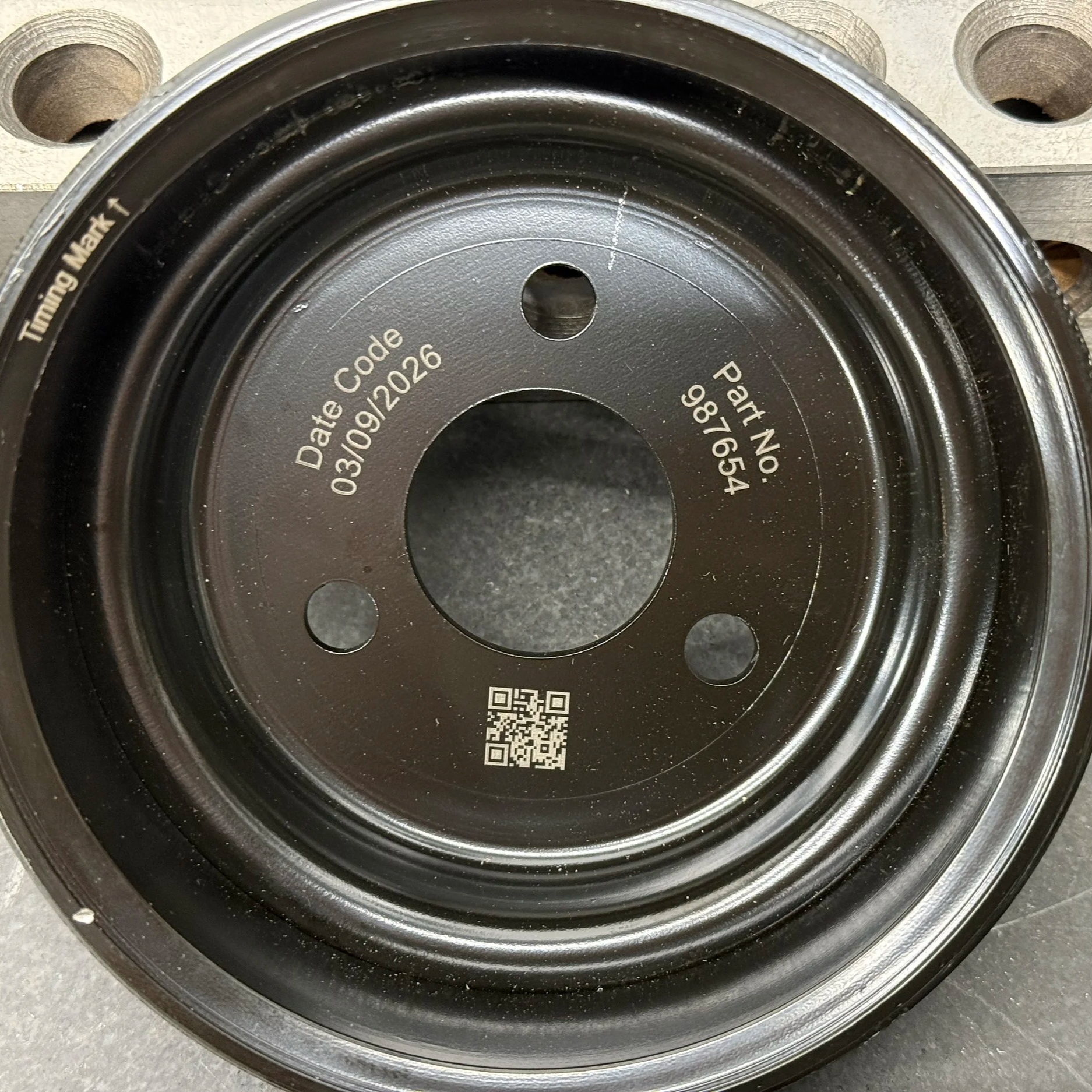
Traditionally, marking parts like front-of-engine pulleys required multiple steps. Flat (2D) systems often struggle with components that have varying surface heights, meaning parts must be repositioned or processed in stages. That adds time, increases the risk of misalignment, and slows overall throughput.
3D laser marking changes that entirely.
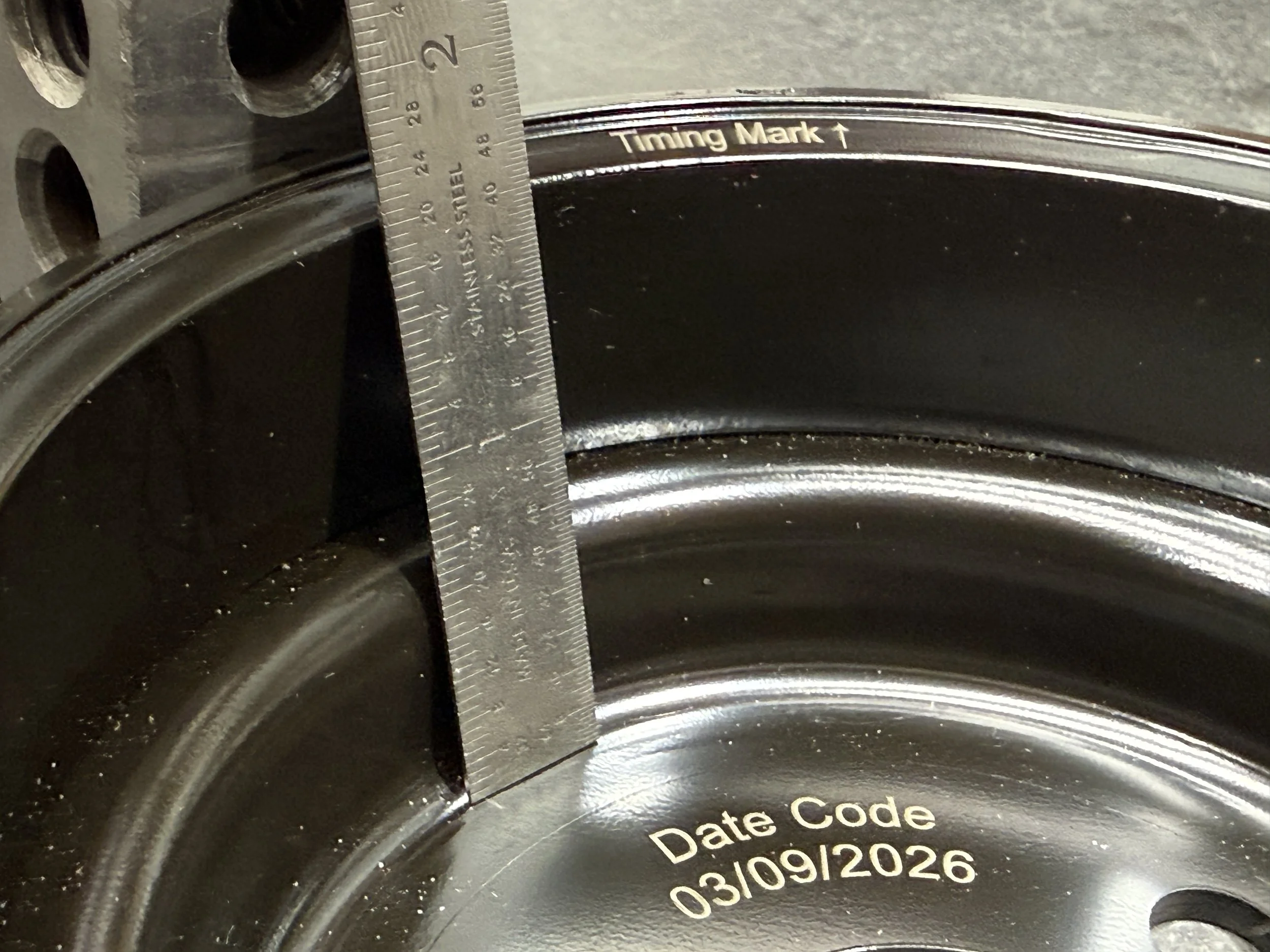
With high-speed 3D processing, the system dynamically adjusts for variable heights—making real-time Z-axis changes as it marks. This allows critical information like part numbers, timing marks, and scaled indicators to be applied across complex geometries in a single, continuous operation. Whether the surface curves, dips, or rises, the marking remains crisp, consistent, and perfectly placed.
The result?
No stopping. No repositioning. No rework.
For automotive manufacturers, this capability is a game-changer. A single pulley can be fully marked—across multiple planes and elevations—without interrupting the process. Even visual elements like measurement scales or ruler-style markings can be integrated seamlessly, improving both functionality and clarity.
Beyond precision, the real advantage is speed. By eliminating extra handling and reducing cycle time, 3D marking systems can increase process efficiency by over 30% compared to traditional 2D methods. That translates directly into higher machine throughput and a stronger return on investment.
It’s no surprise that leading automotive manufacturers are rapidly adopting this technology. When every second counts and every mark matters, high-speed 3D laser marking delivers both performance and reliability—at scale.